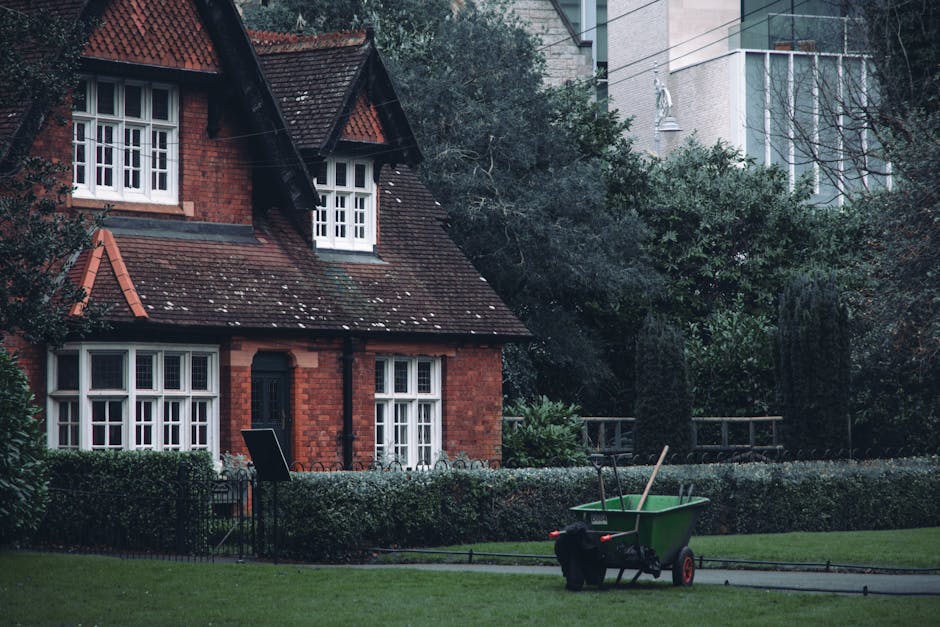
What to know about same day Charlton gardeners for emergencies
If your garden has gone from "slightly messy" to "this needs sorting today," you are not alone. A fallen branch, a blocked path, a storm-damaged fence line, or an overgrown front garden can become a real headache very quickly. Knowing what to know about same day Charlton gardeners for emergencies helps you act fast, make safer choices, and avoid wasting precious time when the pressure is already on.
This guide explains how emergency garden call-outs usually work in Charlton, what kinds of problems justify a same-day visit, what to ask before booking, and how to get the best result without making things more complicated than they already are. Let's face it, when something needs sorting now, clarity matters.
Table of Contents
- Why it matters
- How same day garden help works
- Key benefits and practical advantages
- Who this is for and when it makes sense
- Step-by-step guidance
- Expert tips for better results
- Common mistakes to avoid
- Tools, resources and recommendations
- Law, compliance, standards, or best practice
- Options, methods, or comparison table
- Case study or real-world example
- Practical checklist
- Conclusion
- Frequently asked questions
Why What to know about same day Charlton gardeners for emergencies Matters
Emergency gardening is not just about appearances. Sometimes it is about access, safety, or stopping a small problem from becoming a bigger one. A tree limb hanging low over a driveway, a hedge spilling onto the pavement, or a sudden garden clearance after strong wind can affect how safely people move around your property. In a busy part of London, that practical side matters more than people expect.
Same day support is especially useful when you cannot wait for a routine booking. Maybe you have visitors arriving, a landlord inspection looming, or you simply need to make the garden safe after bad weather. The point is not perfection. The point is getting control back, quickly and sensibly.
There is also a trust angle here. If you call out a local gardener at short notice, you want to know they can work efficiently, communicate clearly, and deal with the mess without creating a second mess. That means being ready with the right details, the right access, and realistic expectations. A little preparation goes a long way.
Expert summary: Same day Charlton gardeners are most valuable when the issue is urgent, safety-sensitive, or time-critical. The best results usually come from a quick assessment, clear photos, and a focused job brief rather than a vague "sort the whole garden" request.
How What to know about same day Charlton gardeners for emergencies Works
The process is usually straightforward, though the exact response time depends on workload, weather, location, and the nature of the job. In most cases, you contact the gardener, describe the problem, send images if you can, and explain what outcome you need by the end of the day.
A same day visit often starts with a rapid triage call. That is simply a quick way of saying the gardener is checking what needs doing first. Is it a hazard? Is access blocked? Is the task a quick tidy-up or a more involved clearance? Those first few minutes help decide what tools, labour, and time are needed.
For example, a wind-blown branch across a path may need only cutting back and removal, while a neglected front garden could require a short-notice clearance, waste bagging, and maybe a second pass if there is a lot of growth. Not every urgent job is identical, and that is fair enough. Gardens rarely read the brief.
Most same day jobs will move through these stages:
- Initial contact: You explain the issue, location, and urgency.
- Assessment: The gardener estimates what can reasonably be done on the day.
- Confirmation: You agree scope, timing, and likely cost or quotation approach.
- Arrival and work: The team arrives with the appropriate tools and starts the priority tasks.
- Clear-up: Waste is gathered, the area is left safe, and the result is checked.
That last step matters more than people think. A rushed job that leaves sharp debris, slippery clippings, or unstable branches is not really solved. It has only been moved around a bit.
Key Benefits and Practical Advantages
The biggest advantage of same day garden support is obvious: speed. But speed on its own is not the whole story. The real value is in what that speed does for safety, stress, and property presentation.
- Reduced risk: If a branch is hanging loose or a path is blocked, prompt action can lower the chance of injury or damage.
- Less stress: A fast response removes the "what on earth do I do now?" feeling that urgent jobs often trigger.
- Better first impressions: If you are expecting guests, tenants, buyers, or an inspection, a tidy garden helps immediately.
- Practical containment: Emergency work can stop weeds, debris, or broken planting from spreading into a larger clean-up.
- Local convenience: A Charlton-based or nearby team can often travel and assess more efficiently than a distant provider.
There is a quieter benefit too. A good emergency gardener tends to bring order to chaos. That sounds dramatic, maybe, but when you see a messy boundary transformed into a clean, usable space in a single afternoon, it does feel oddly calming. Like exhaling after holding your breath for too long.
If you later want to plan the longer-term fix, it can be useful to look at ongoing garden maintenance or broader services overview options so the same issue does not keep returning.
Who This Is For and When It Makes Sense
This kind of service is for more people than you might expect. Homeowners often think of it first, but same day garden help can also be useful for landlords, letting agents, property managers, business premises, and anyone preparing a property for a short deadline.
It makes sense when the situation is urgent but still manageable by a gardener. That distinction matters. A fallen tree that is tangled in overhead lines, for instance, is not a standard garden tidy-up. Likewise, major structural damage may need specialist attention before anyone starts cutting or clearing. If in doubt, stop and ask for guidance before trying to deal with it yourself.
Typical scenarios include:
- Storm debris scattered across paths, lawns, or driveways
- Heavy hedge growth blocking access or sight lines
- Branches pressing on fences, sheds, or decking
- Last-minute clearance before a rental check-out or sale viewing
- Overgrown lawns that need immediate presentation work
- Unsafe piles of cuttings after a rushed DIY attempt
You might also need same day help after a neighbour's tree drops debris into your space. It happens. British weather does not exactly ask permission.
For properties with timber structures or outdoor seating areas, urgent work may sit alongside repairs or cleaning. In some cases, people pair garden help with decking services or broader landscaping work once the immediate issue is under control.
Step-by-Step Guidance
If you need same day Charlton gardeners in an emergency, the best results usually come from keeping the process tight and practical. Here is a simple way to handle it.
- Identify the real problem. Is the garden unsafe, inaccessible, or simply untidy in a way that has become urgent?
- Take clear photos. Include wide shots and close-ups so the gardener can judge scale and equipment needs.
- List the priority outcome. For example: clear the path, make the front garden presentable, remove broken branches, or cut back growth from the boundary.
- Check access. Note gates, parking space, pets, neighbours, or any awkward access points.
- Ask what is included. Waste removal, bagging, cutting, and disposal should be discussed plainly.
- Confirm the time window. Same day does not always mean immediate. Ask for the earliest realistic arrival.
- Prepare the space. Move vehicles, unlock access, and keep children and pets away from the work area.
- Review the result. Check that the area is safe and that any agreed waste has been removed.
One small but useful habit: save the job details in writing, even if it is only a message thread. It makes the day easier if anything needs clarifying later. Nothing fancy. Just practical.
If the issue is part of a wider decline in the garden, it may be worth scheduling follow-up garden clearance or regular lawn mowing once the emergency has passed.
Expert Tips for Better Results
When people call for emergency garden help, the strongest outcomes usually come from simple, honest communication. The gardener cannot see the whole picture from a single sentence, so give context without overcomplicating it.
1. Send photos before you call if possible. A picture of a branch on the lawn tells more than a paragraph. It also helps the gardener bring the right kit the first time.
2. Be clear about urgency. If the job is blocking a front door, say so. If it is mainly a visual issue before guests arrive, say that too. Different urgency levels call for different priorities.
3. Keep the scope tight. Emergency work is usually best focused on safety and access. Trying to add a full redesign on the same day can slow everything down. Bit of a trap, really.
4. Ask about waste handling. Cuttings, branches, soil, and mixed green waste can all need different handling. Confirming disposal upfront avoids awkwardness later.
5. Look for evidence of safe working. A serious provider will think about tools, manual handling, and the condition of the site. The best teams do not rush just for the sake of looking busy.
6. Plan for the follow-up. Sometimes the emergency is only the visible part of the issue. Once the immediate mess is sorted, you may need trimming, shaping, or restoration work.
If you want a better long-term result, consider whether the job is actually the start of a maintenance pattern. A one-off fix is useful. A tidy-up that keeps the garden stable for months is better.
Common Mistakes to Avoid
Urgency makes people do odd things. That is normal. Still, there are a few predictable mistakes that can make a same day garden problem harder than it needs to be.
- Calling without details: "My garden needs help" is too vague for an emergency. Give the key facts.
- Assuming all jobs are the same: Clearing a hedge overhang is very different from removing storm debris or managing an overgrown rear garden.
- Focusing only on price: The cheapest option is not always the one that responds fastest or works safest.
- Leaving access unresolved: If the gate is locked or parking is impossible, the team may lose time before they even start.
- Mixing urgent and non-urgent tasks: A same day visit should stay focused. Save the bigger wishlist for later.
- Doing unsafe DIY first: Cutting unstable branches or lifting heavy debris without the right approach can lead to avoidable injury.
One more thing: do not be embarrassed if the garden is in a terrible state. People call in emergencies precisely because they need help. No judgement, just practical action.
Tools, Resources and Recommendations
You do not need specialist equipment yourself to book emergency garden help, but it helps to know what the team is likely to use. That makes conversations easier and gives you a sense of whether the job is being handled properly.
| Situation | Typical tools or approach | What to check |
|---|---|---|
| Storm debris | Secateurs, saws, tarps, debris bags, wheelbarrows | Safe removal, no sharp leftovers, clear paths |
| Overgrown hedge or boundary | Hedge trimmers, ladders or access equipment, waste bags | Cut line, property access, neighbour boundaries |
| Urgent lawn recovery | Mower, edging tools, rakes, blowers where suitable | Even finish, clipping removal, no hidden debris |
| Broken branches near structures | Careful sectional cutting, ropes or controlled removal methods | Protection of fences, sheds, and windows |
| Post-rush clear-up | Rakes, sacks, barrows, sorting for green waste | Waste grouped neatly and site left tidy |
Helpful supporting pages on the site include hedge trimming for boundary growth issues and tree lopping and removal when branches or tree-related hazards need extra care.
You may also want to review practical company information such as pricing and quotes, insurance and safety, and the health and safety policy before booking. That is not overcautious. It is sensible.
Law, Compliance, Standards, or Best Practice
For garden emergencies, compliance usually comes down to safety, access, and responsible waste handling. Exact duties can vary depending on whether the property is domestic, rented, or part of a managed site, so it is wise to be careful rather than assuming one rule fits every job.
In practical terms, a good local gardener should work in a way that reduces risk to people, property, and neighbours. That means paying attention to trip hazards, loose branches, unstable surfaces, and any materials that could injure someone if left behind. If waste is removed, it should be handled responsibly and in line with normal UK expectations for green waste and site cleanliness.
For landlords and managing agents, timing can matter just as much as workmanship. A sudden overgrowth issue before an inspection or vacancy handover can create avoidable friction. For homeowners, the priority may be safety and access. Same problem, different pressure. The best approach is to be clear about the property context from the outset.
Good practice also includes:
- Working within the limits of what is safe on the day
- Not forcing access around damaged structures
- Agreeing the scope before work starts
- Keeping communication clear if the job is bigger than first thought
- Using appropriate protective equipment and sensible site control
If you want to understand the provider's operational approach, pages such as about us and services overview can help you judge whether the service feels organised and trustworthy.
Options, Methods, or Comparison Table
Not every urgent garden problem needs the same kind of response. Sometimes a quick tidy-up is enough. Sometimes you need a more involved clearance or specialist cutting. Here is a simple comparison that can help you think it through.
| Approach | Best for | Strengths | Limitations |
|---|---|---|---|
| Same day gardener visit | Urgent but manageable jobs | Fast response, practical, local | Limited time, may not cover large redesigns |
| Scheduled garden maintenance | Recurring mess or ongoing upkeep | Prevents repeat problems, more planned | Not suitable when action is needed now |
| Targeted clearance | Heavy cuttings, debris, neglected areas | Efficient for messy spaces | Can be more disruptive if the site is very cluttered |
| Specialist tree work | Large or risky branches, tree-related hazards | Safer for more technical work | Not always necessary for simple pruning |
For many people, the answer is not one method forever. It is a sequence. First the emergency is handled, then the garden is stabilised, and then the regular maintenance plan stops it happening again. That sequence makes sense. Honestly, it is the least stressful route.
Case Study or Real-World Example
A Charlton homeowner gets a call late in the morning: a heavy gust has snapped part of a shrub and scattered branches across the front path. Guests are due that evening, and the path is the main access point. There is also a low hedge that has gone a bit wild over the past month, so the whole frontage looks messy, not just unsafe.
The homeowner sends a few photos, explains the access issue, and asks for same day help. The gardener arrives with cutting tools, waste bags, and a plan focused on the most immediate risks first. The broken material is removed, the path is cleared, and the hedge is trimmed back enough to restore access and improve the appearance.
What made the job go smoothly was not luck. It was the combination of clear communication, realistic expectations, and a narrow brief. The garden did not become perfect in one afternoon, because that was never the job. But it became safe, tidy, and usable again. Which, to be fair, is exactly what most people need in an emergency.
Afterwards, the homeowner books a routine maintenance visit to stop the hedge becoming a nuisance again. That is a common pattern, and a sensible one.
Practical Checklist
Use this checklist before you book same day Charlton gardeners for an emergency.
- Identify the urgent issue clearly.
- Take photos from a few angles.
- Decide the single most important outcome.
- Check access, parking, gates, and pets.
- Confirm whether waste removal is included.
- Ask for the earliest realistic arrival time.
- Keep the job focused on safety and access first.
- Make sure the site is clear enough for work to begin.
- Review the finished area before the team leaves if possible.
- Plan any follow-up maintenance while the problem is still fresh in your mind.
If you are unsure whether the job is an emergency or just overdue, a good rule is simple: if it affects safety, access, or an immediate deadline, treat it as urgent. If it is only cosmetic, it may be better to book it as a planned visit. That little distinction saves time and money.
Conclusion
What to know about same day Charlton gardeners for emergencies really comes down to three things: act quickly, explain the problem clearly, and keep the first visit focused on the immediate issue. When you do that, you give yourself the best chance of getting safe, sensible results without extra stress.
Emergency garden work is not about overthinking it. It is about regaining control of the space, protecting people and property, and setting up a proper follow-up if needed. The sooner you make the call, the easier the day tends to feel.
Get a free quote today and see how much you can save.
If you are ready to move from "this is a problem" to "that is sorted," the next step is straightforward. Reach out, explain the situation, and let a local team help you get the garden back under control. Small reliefs count for a lot, especially on a busy day.
Frequently Asked Questions
What counts as a garden emergency in Charlton?
A garden emergency is usually anything that affects safety, access, or time-critical presentation. That might include fallen branches, blocked pathways, dangerous overgrowth, or storm damage that needs same day attention.
Can a same day gardener handle storm damage?
Yes, if the damage is within a manageable garden scope and not part of a larger structural or utility issue. The gardener may clear debris, cut back broken growth, and make the space safer, but truly hazardous situations may need specialist help first.
How fast can same day Charlton gardeners usually arrive?
Response times vary depending on workload, travel distance, weather, and the size of the job. Some visits happen within hours, while others are scheduled later the same day. It is best to ask for the earliest realistic window rather than assume immediate arrival.
Will I get a quote before the work starts?
Usually, yes. A gardener may give an estimate from photos or a short call, then confirm the price once they have seen the site. For emergency work, being clear about scope helps keep the quote accurate.
Is emergency garden work more expensive than a normal booking?
It can be, because short-notice jobs often require faster scheduling and more flexible resource use. That said, the exact cost depends on the size of the job, access, waste removal, and how much labour is involved.
What should I send when I ask for same day help?
Photos, a short description of the issue, the property address, access details, and your preferred timing are all helpful. The more specific you are, the easier it is for the gardener to judge what can be done on the day.
Can a gardener remove large branches?
Often yes, if the branches are reasonably accessible and the work is safe. Larger or more technically risky tree issues may need specialist attention, which is why it helps to mention the size and location of the branches upfront.
Do I need to be at home for the visit?
Not always, but it depends on access arrangements and what the gardener needs to inspect. If you can be present, it often makes the process smoother. If not, clear instructions and secure access become more important.
What if the job turns out to be bigger than expected?
A good gardener should tell you as soon as possible if the work is growing beyond the original scope. At that point, you can decide whether to continue, pause, or book a second visit. Clear communication is the key there.
Should I choose emergency garden clearance or regular maintenance?
If the issue is urgent and affecting safety or access, emergency clearance makes sense. If the problem is recurring and not time-sensitive, regular maintenance is usually the better long-term option because it prevents the same mess from returning.
How do I know the work was done properly?
Look for a clear, safe space, tidy waste handling, and a finish that matches what was agreed. The area should be usable again, with obvious hazards removed and no messy leftovers where people walk or stand.
What if I only need the front garden tidied quickly?
That is still a valid same day request. In fact, front gardens are often the most time-sensitive because they affect access and first impressions straight away. A focused tidy-up can make a big difference very quickly.